Fiji Mobility Assistance for Easier Travel
Fiji Mobility Assistance for Easier Travel
A Fiji vacation can be wonderfully relaxed, but the islands are not one-size-fits-all for travelers who use a wheelchair, scooter, walker, cane, or need extra help getting around. Fiji mobility assistance works best when it is planned around the real details of your trip: your arrival airport, resort layout, transfer vehicle, chosen islands, and the activities that matter most to you. A little advance conversation can turn a complicated itinerary into a holiday built around comfort, confidence, and memorable time together.
What Fiji mobility assistance can include
Mobility assistance is not a single service. Depending on your needs, it may include airport wheelchair support, a vehicle with room for a folded wheelchair, step-free accommodation, an accessible bathroom, assistance boarding a boat, or an activity operator who can adapt the experience where possible.
The right arrangement depends on your level of mobility and the kind of equipment you travel with. A guest who can take a few steps with support may have many more options than a traveler who must remain in a powered wheelchair at all times. Neither situation should stop you from enjoying Fiji, but both require clear, early planning.
Fiji’s best-known resorts and tour operators vary widely in their facilities. Larger properties may have paved pathways, accessible rooms, ramps, and trained staff, while smaller island resorts can involve sand, uneven ground, jetties, stairs, or boats with narrow boarding points. That difference is not a reason to avoid smaller, more remote experiences. It is a reason to ask precise questions before confirming them.
Start with the arrival and transfer plan
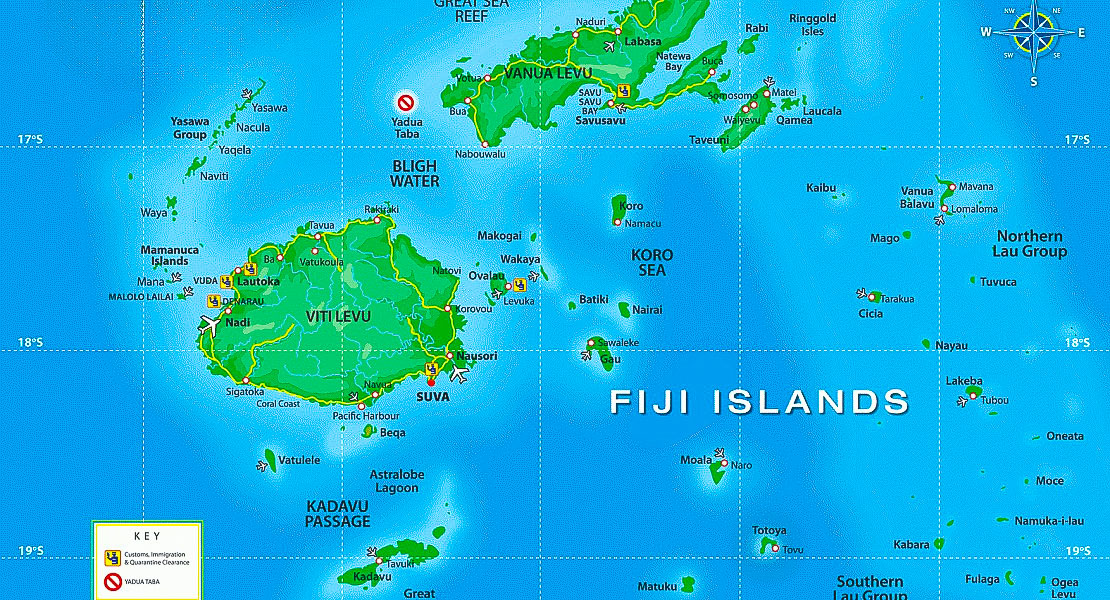
For many visitors, Fiji begins at Nadi International Airport. Request airport assistance directly with your airline well before departure, including help through the terminal and support when transferring between your flight and ground transportation. Airlines often have their own lead times and battery rules for powered mobility devices, so do not leave this until check-in day.
Your resort transfer deserves the same attention as your flight. A standard private car or shared coach may be comfortable for some guests but unsuitable for others. Tell your booking team whether your wheelchair folds, its approximate weight and dimensions, whether you can transfer into a vehicle seat, and whether you travel with a companion who can assist. If a lift-equipped vehicle is needed, availability can be limited, particularly during busy travel periods.
Transfers to island resorts require an additional layer of planning. The journey may include a road transfer followed by a catamaran, launch, or small boat. Ask not only whether a boat transfer is available, but how boarding happens in the expected tide and weather conditions. A level marina berth offers a very different experience from stepping down into a smaller vessel at a beach landing.
Choose a resort that fits your daily routine
An accessible room alone does not guarantee an accessible stay. Think through the journey from your room to breakfast, the pool, beach, reception, restaurants, and departure point for tours. Some resorts are spread across gardens or hillside grounds, and a room that is close to one facility may be far from another.
Before booking, ask about pathway surfaces, gradients, curbs, door widths, bathroom layouts, shower access, bed height, and the location of nearby accessible restrooms. Photos can help, but measurements and an honest description from the property are more useful than a broad claim that a resort is “wheelchair friendly.”
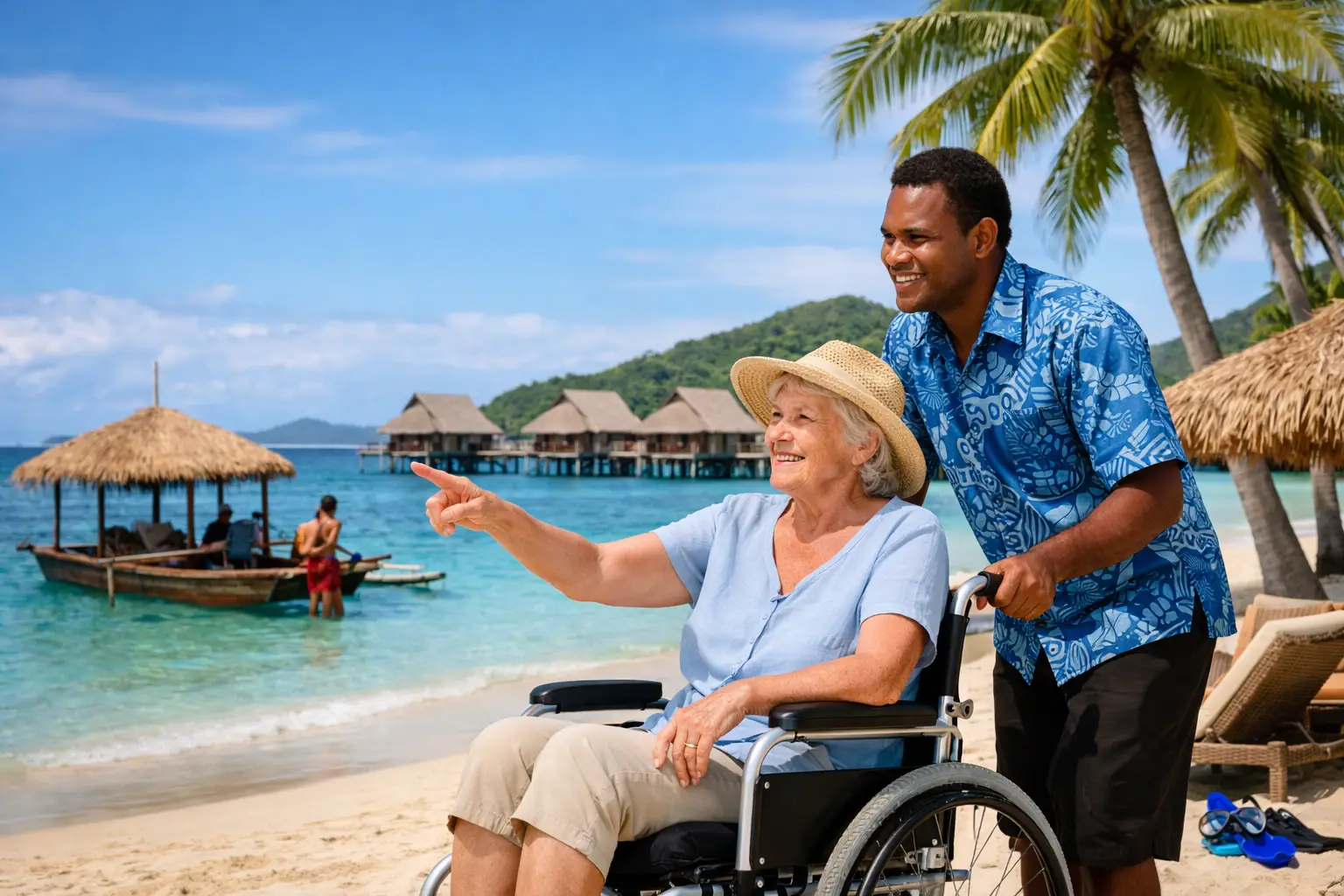
Beach access also varies. Firm paths and beach wheelchairs may be available at some properties, while soft sand can make independent access difficult at others. If swimming is a priority, ask whether there are handrails, a gradual pool entry, a lift, or staff who can provide safe assistance. Respectful support should be agreed in advance, rather than assumed on arrival.
For travelers who need a quieter pace, a larger mainland resort may offer easier movement and more consistent infrastructure than a remote island stay. For others, a split stay can be the best balance: several nights at an accessible base near Nadi or the Coral Coast, followed by a carefully selected island escape. It depends on how much assistance is required and which Fiji moments are highest on your wish list.
Match tours to your access needs
Fiji is famous for clear water, village hospitality, rainforest scenery, and cruises to small islands. Many of these experiences can be enjoyable with mobility limitations, but the access point matters as much as the destination.
A sunset cruise departing from a marina may involve fewer physical barriers than a waterfall walk on natural trails. A cultural visit may be suitable if the venue has a firm approach and seating available, while a 4WD safari can be challenging for guests who cannot manage vehicle steps or bumpy roads. Snorkeling excursions may work well for confident swimmers who can transfer with assistance, but they are not automatically appropriate for every wheelchair user.
When comparing activities, ask about the complete experience: parking or pickup, vehicle access, restroom availability, walking distances, boarding steps, seating, terrain, shade, and the route back at the end of the day. Also ask whether staff can safely store a folding chair or mobility aid during the activity. Clear answers help set realistic expectations and avoid a difficult decision at the dock, trailhead, or village entrance.
Discover Fiji’s Accessible Fiji program is designed to help travelers identify suitable experiences and coordinate practical details with local operators. Local knowledge matters here. Conditions can change with tides, weather, seasonal demand, and the specific vessel or vehicle assigned that day, so a confirmed plan should always reflect your individual requirements.
Give your booking team the details they need
You do not need to explain your medical history. What operators need is practical information that helps them prepare safely. Share these details at the time of inquiry:
- The type of mobility device you use, including whether it folds and its dimensions and weight.
- Whether you can transfer independently, with a companion’s help, or require staff assistance.
- The number of steps you can manage, if any, and whether ramps or a lift are essential.
- Any equipment that needs charging, particularly a powered wheelchair or scooter.
- The activities you hope to enjoy, from a relaxed lagoon cruise to a cultural tour or accessible beach time.
This information lets a local specialist recommend options based on fit, not guesswork. It also gives operators time to arrange the right vehicle, seating position, storage space, or additional crew support where available.
Bring a practical backup plan
Even with excellent preparation, island travel has variables. Heavy rain can affect pathways, sea conditions can change boat boarding, and a remote location may have fewer replacement vehicles or spare equipment than a major city. Build in breathing room rather than scheduling every day around a tight connection.
Keep medications, mobility-device instructions, chargers, adapters, and essential supplies in your carry-on. If you use a powered chair or scooter, travel with battery information and manufacturer handling instructions for the airline. A lightweight rain cover, small repair kit, and contact details for your insurance provider can also provide reassurance.
It is wise to arrange travel insurance that reflects your needs, including medical support and mobility equipment coverage. Read the policy carefully, especially its definition of pre-existing conditions and any limits on equipment value. The best policy is not necessarily the cheapest one – it is the one that matches the trip you are actually taking.
Travel with confidence, not assumptions
Accessible travel in Fiji is growing, and thoughtful planning can open up far more than a resort room with a ramp. The key is to be specific about what makes you comfortable, choose experiences with honest access information, and allow local teams enough time to coordinate the details.
Fiji hospitality is at its best when your hosts know what will make your day easier. Ask the questions early, keep your itinerary realistic, and leave room for the simple pleasures that make these islands unforgettable: warm water, shared meals, ocean views, and time spent at your own pace.