Fiji Scuba Versus Snorkeling: Which Is Best?
Fiji Scuba Versus Snorkeling: Which Is Best?
A Fiji reef can begin just steps from a beach, which makes choosing how to see it more meaningful than it might be elsewhere. In the Fiji scuba versus snorkeling decision, there is no single winner. The better choice depends on how much time you have, who is traveling with you, your comfort in the water, and whether you want an easy glimpse of the reef or a deeper underwater adventure.
Fiji is known for luminous coral gardens, warm water, tropical fish, and dramatic soft-coral scenery. Snorkeling lets almost anyone enjoy that color with minimal preparation. Scuba opens the door to reef walls, deeper pinnacles, and marine life that stays beyond the surface. Both can be exceptional on the right day, especially when you choose an operator that knows the local conditions and reef sites well.
Fiji Scuba Versus Snorkeling: The Key Difference
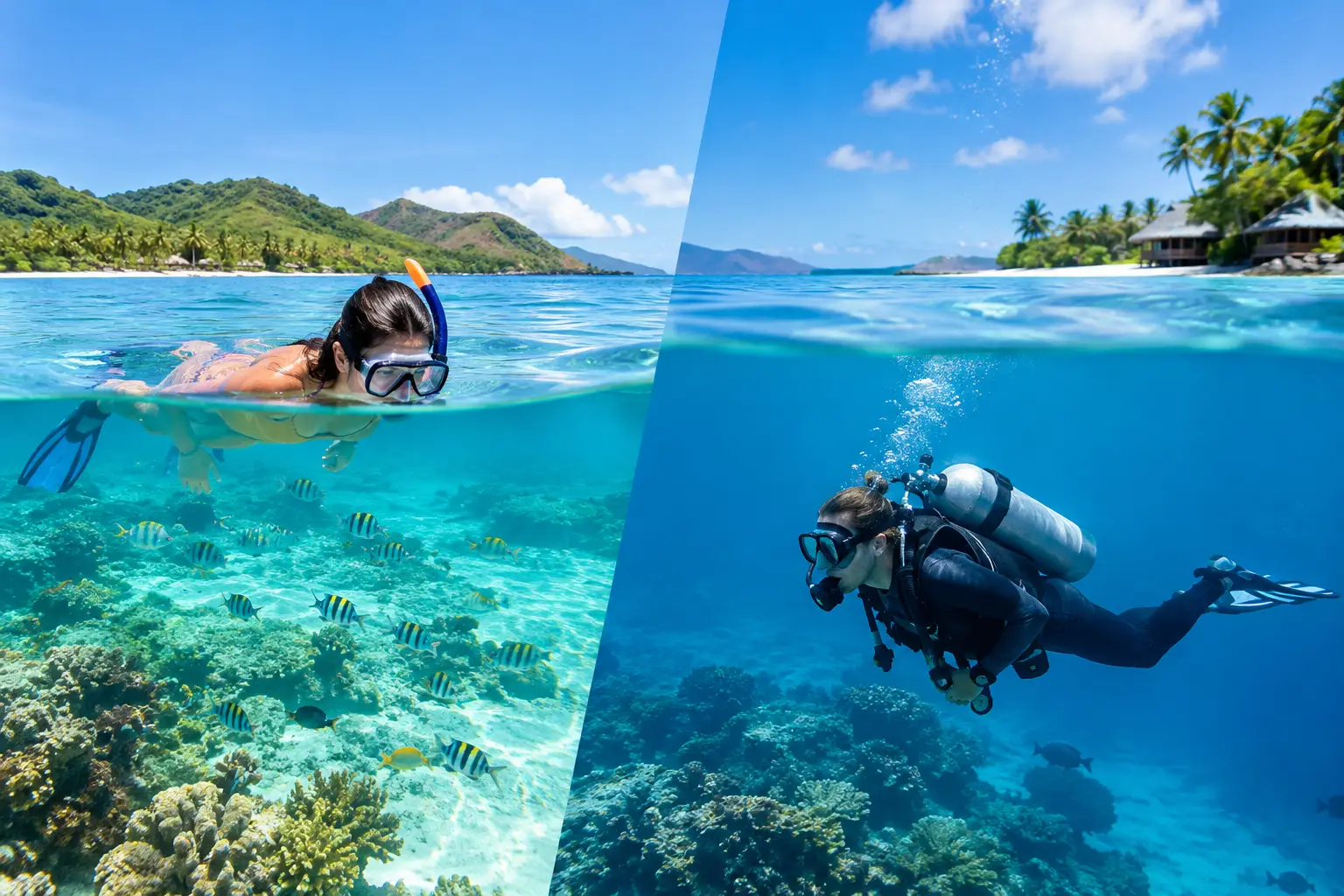
Snorkeling keeps you at the surface, looking down through a mask while floating or gently finning above the reef. It is easy to learn, requires little equipment, and often fits naturally into a beach day, island cruise, or family outing. In Fiji, many lagoon reefs are shallow enough that you can see coral formations and schools of fish without descending at all.
Scuba diving uses a tank, regulator, buoyancy equipment, and training to let you breathe underwater. That additional preparation is rewarded with a different perspective. You can move alongside a reef rather than looking down at it, observe smaller creatures tucked into coral, and visit sites too deep or exposed for snorkeling.
The choice is not simply about how much marine life you will see. A calm, shallow reef can be more colorful and satisfying on snorkel than a poorly matched dive site. The best experience is the one suited to your group, your confidence, and the conditions on the day.
Choose Snorkeling for an Easy, Flexible Reef Day
Snorkeling is often the smartest choice for first-time visitors, families with children, mixed-age groups, and travelers who want to combine several experiences in one day. You can spend an hour in the water, relax on the beach, enjoy lunch, and return for another swim without committing to a full dive schedule.
Shallow reefs can be spectacular
Fiji’s shallow lagoons can hold plenty of life. Expect bright reef fish, giant clams, sea stars, hard corals, and patches of soft coral moving with the current. Sunlight also plays a major role: colors are often vivid in shallow water, particularly on a clear morning when the sea is calm.
Snorkeling is also a practical choice if only part of your group wants an underwater activity. One person can explore the reef while another stays close to shore, joins a boat cruise, or relaxes on deck. Many day trips work well for this kind of flexible vacation pacing.
What snorkeling asks of you
You do not need prior experience, but being comfortable putting your face in the water makes a real difference. A well-fitted mask, flotation aid if needed, and a short briefing can turn nervous first-timers into confident snorkelers. Children should be closely supervised, and everyone should respect currents, boat traffic, and the guide’s instructions.
Choose a tour that provides good-quality equipment, clear reef guidance, and realistic advice about water conditions. If wind or swell makes an exposed site uncomfortable, a knowledgeable local crew can often recommend a more sheltered alternative.
Choose Scuba for Depth, Detail, and More Time Underwater
Scuba is the better match when the underwater world is a central reason for your Fiji trip. It gives you time to settle at reef level, hover beside coral bommies, and notice details that are difficult to spot from the surface. Fiji has earned its reputation among divers for good reason, particularly at sites where nutrient-rich currents support healthy soft corals and dense fish life.
What scuba can show you
At depth, the reef becomes more three-dimensional. You may explore slopes, swim along walls, circle pinnacles, or pause to watch reef fish move through coral heads. Depending on the region and conditions, divers may encounter turtles, reef sharks, rays, schools of trevally, and fascinating smaller life such as nudibranchs and shrimp.
Scuba also makes sense for certified divers who want a purpose-built dive day rather than a general island cruise. A quality operator will consider your certification level, recent dive experience, air consumption, and the current before choosing a site. Fiji’s water can be gentle and inviting, but some of its most exciting sites are affected by current and are best for divers with appropriate experience.
First-time divers can still participate
You do not have to arrive certified to experience scuba. Introductory dives are available in many Fiji resort areas, usually beginning with a detailed safety briefing and confined-water skills before a closely supervised ocean dive. This can be a memorable option for confident swimmers who want to try breathing underwater for the first time.
However, an introductory dive is not a substitute for a certification course, and it is not right for everyone. If you feel anxious in deep water, have ear-pressure difficulties, or prefer to stay near the surface, snorkeling may offer more enjoyment with less pressure. Divers should always disclose medical conditions and follow the operator’s fitness requirements.
Consider the Time, Cost, and Vacation Logistics
Snorkeling usually wins for convenience. There is no certification requirement, equipment setup is brief, and it can be added to many day cruises and beach excursions. It is generally the more budget-friendly way for a family or group to see Fiji’s reefs.
Scuba requires more time and a larger financial commitment. Certified dives involve gear checks, safety briefings, boat travel, and surface intervals between dives. If you are flying after your dive, you also need to plan around the required no-fly interval advised by your dive professional. That timing can affect where scuba fits in your itinerary, especially near the end of a short vacation.
For travelers staying on the main islands, transport matters too. The best reef experience may involve a boat transfer, an early resort pickup, or a full-day trip to an outer island. Booking through a locally vetted provider helps remove the uncertainty around pickup points, equipment standards, and which experience genuinely suits your ability level. Discover Fiji can help travelers compare trusted water activities with real-time availability and support before and during their trip.
Think About Conditions, Not Just the Activity
The same location can feel completely different from one day to the next. Wind, tide, visibility, rainfall, and current influence both snorkeling and scuba. A sheltered lagoon may be ideal for beginner snorkelers while a current-fed outer reef delivers the stronger scuba experience for certified divers.
Be honest about your confidence level when booking. Strong swimmers are not automatically experienced snorkelers or divers, and a calm-looking sea can still have current. On the other hand, travelers who are hesitant about open water should not assume they have to miss out. A guided shallow-water snorkel, flotation support, and a patient crew can make the reef accessible at a comfortable pace.
Fiji Reef Experiences for Families and Accessible Travel
For families, snorkeling is usually the simplest shared activity, particularly when children are old enough to use a mask and listen to safety instructions. Look for calm-water itineraries, smaller group sizes where possible, and crews willing to help with mask fitting and confidence in the water.
Travel made accessible for everyone requires individual planning rather than assumptions. Some guests with mobility, sensory, or medical considerations may be able to enjoy certain boat trips or water experiences with the right support, while others may prefer scenic cruising and island time. Discuss needs in advance so the operator can advise honestly on vessel access, transfers, water entry, and available assistance.
A Simple Way to Make Your Choice
Choose snorkeling if you want a relaxed, lower-commitment activity, are traveling with children or non-divers, or want to enjoy the reef between other island experiences. Choose scuba if you are certified, eager to spend more time underwater, or ready for a supervised introductory experience that may lead to a new passion.
If you have several days in Fiji, there is no need to choose only one. Start with a snorkel early in your stay to get comfortable with the water and reef environment. Then, if the feeling of floating above the coral leaves you wanting to get closer, set aside a day for scuba with a reputable local crew. Fiji’s reefs reward curiosity at every depth.