Accessible Tours in Fiji That Truly Work
Accessible Tours in Fiji That Truly Work
Not every “accessible” tour feels accessible once you arrive. A steep gangway, a hard-to-navigate restroom, or a transfer vehicle that looked fine in photos can change the whole day. That is why planning accessible tours in Fiji takes more than picking a beautiful destination – it takes local knowledge, honest detail, and the right support before you book.
Fiji can be a fantastic choice for travelers of all abilities, but like many island destinations, accessibility varies widely from one experience to the next. Some tours are thoughtfully adapted, with easier boarding, supportive staff, and routes that reduce barriers. Others may be enjoyable for one traveler and frustrating for another. The difference usually comes down to the specifics.
What makes accessible tours in Fiji genuinely useful
The best accessible tours in Fiji are not defined by a single label. They work because the full experience has been considered, from pickup and vehicle access to boarding points, terrain, seating, restrooms, and the pace of the day. A tour can look suitable on paper but still be difficult if there are several transitions between transport types or long stretches on sand, gravel, or uneven village paths.
That is why accessibility in Fiji often needs to be described, not assumed. For one traveler, a low-step vehicle and minimal walking may be enough. For another, wheelchair-friendly transfers, accessible bathroom access, and staff assistance during every transition may be essential. Travelers with limited mobility, sensory needs, chronic pain, or neurodivergent travel preferences may all define “accessible” differently, and that is completely normal.
In practical terms, the most successful bookings happen when expectations are matched to real conditions. Clear pre-booking information matters just as much as the tour itself.
The types of accessible tours in Fiji to look for
Some experiences tend to be easier to adapt than others. Scenic drives, selected cultural visits, private transfers paired with sightseeing, and certain day cruises can often work well when the operator understands a guest’s needs in advance. The reason is simple – these tours can sometimes be adjusted for pacing, stop length, boarding support, or seating arrangements.
Scenic and cultural experiences
For many travelers, land-based sightseeing is the easiest place to start. A well-planned island drive with photo stops, a cultural performance in a venue with straightforward entry, or a village-style experience with limited walking can offer a rich day out without the physical demands of more adventurous activities.
That said, not every cultural tour is equal. Some include uneven ground, narrow walkways, steps without rails, or traditional seating that may not suit every guest. It helps to ask whether chairs are available, whether surfaces are paved or compacted, and how far guests must walk from the vehicle to the main activity area.
Day cruises and water-based outings
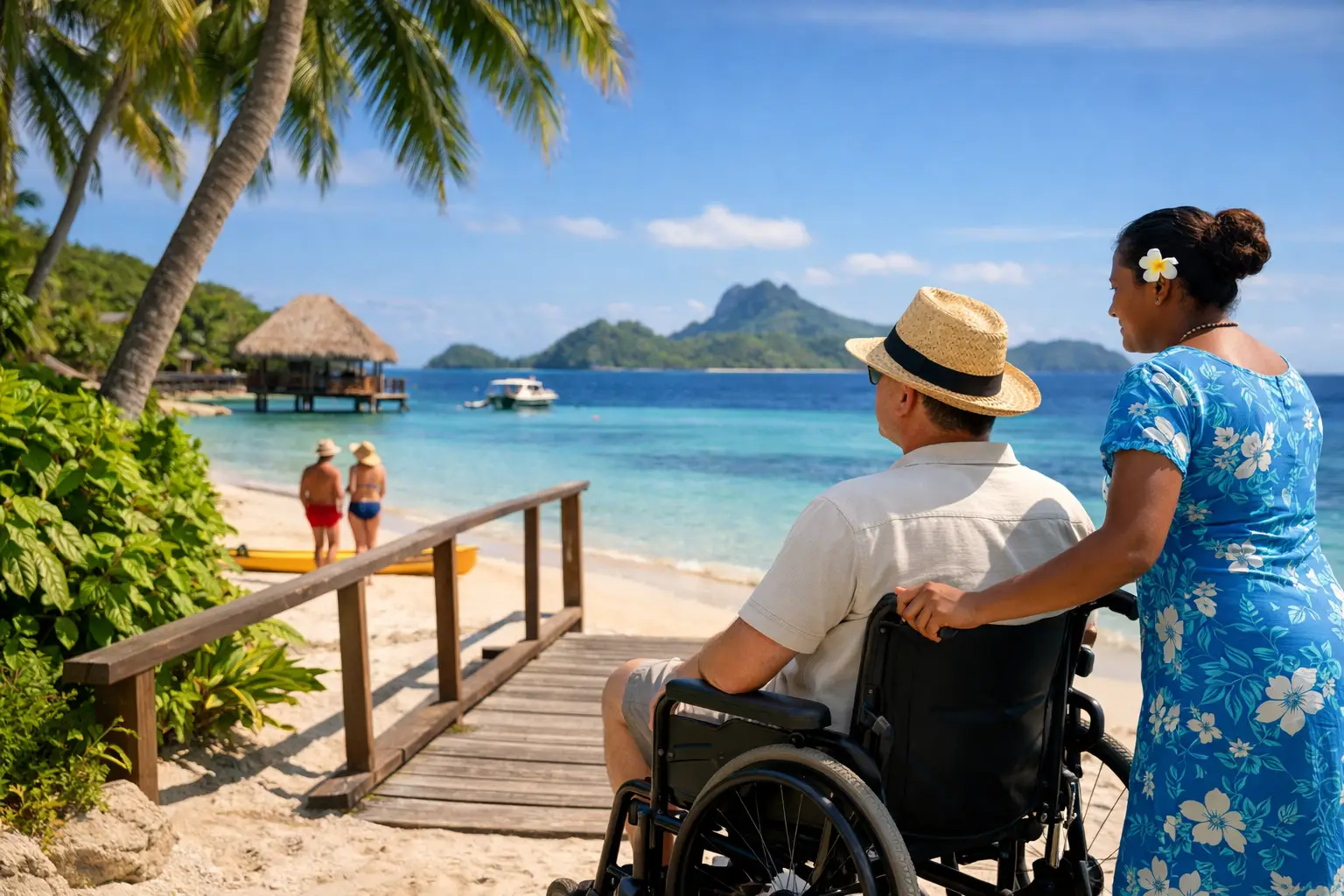
A Fiji vacation naturally draws people toward the water, and some day cruises can be a good option for travelers with accessibility needs. The key question is not just whether the boat is comfortable, but how guests board and disembark. A stable marina departure is very different from a beach launch, and that one detail can completely shape the experience.
Onboard comfort also matters. Shade, seating with back support, accessible restrooms, crew assistance, and enough space to move safely can make a big difference. If snorkeling or swimming is part of the itinerary, ask whether the tour is still worthwhile for non-swimmers or guests who prefer to stay onboard. On a good cruise, the answer is yes.
Private touring for more control
Private touring is often the strongest choice when travelers need flexibility. It allows more control over departure times, stop duration, walking distance, and the overall pace of the day. This can be especially helpful for families traveling with a wheelchair user, older parents, or anyone managing fatigue or sensory overload.
Private options can also reduce the pressure of keeping up with a larger group. If one stop turns out to be less accessible than expected, the day can often be adjusted. That kind of flexibility is hard to overstate on an island vacation where road conditions, weather, and local infrastructure can vary.
Questions worth asking before you book
A beautiful tour description is helpful, but it should never be the only thing you rely on. The best way to book with confidence is to ask targeted questions that reveal how the day actually runs.
Start with transportation. Is pickup available from your resort, and what kind of vehicle is used? Does it have a ramp, low entry, extra space for mobility equipment, or room for a caregiver to assist comfortably? In Fiji, the transfer portion of a tour can be just as important as the activity itself.
Then ask about the route. How many steps are involved? Are there steep inclines, loose gravel, sand, or dock transitions? Are accessible restrooms available, and if so, at what point in the day? If meals are included, can seating be adjusted and dietary needs handled easily?
You should also ask how the operator supports different kinds of needs. A traveler with limited mobility may need physical access details. A traveler with autism may want to know about crowd levels, noise, waiting time, and whether the itinerary can be simplified. A guest with hearing or vision needs may benefit from extra staff guidance. The more specific the answers, the more trustworthy the booking.
Why local vetting matters in Fiji
Fiji is warm, welcoming, and memorable, but it is not a destination where generic booking information always tells the full story. Conditions can change by island, marina, weather, and operator. What sounds manageable from overseas may feel very different on the ground.
That is where local expertise becomes valuable. A locally informed team can explain whether a jetty has rails, whether a vehicle can reach the entrance directly, or whether a tour that seems accessible is only suitable with assistance. Those details save travelers from disappointment and help families plan realistically.
This is also why pre-vetted options are so important. Discover Fiji’s Accessible Fiji program reflects a practical approach to inclusive travel – not broad promises, but a focus on experiences that can be matched to real traveler needs. That kind of guidance is especially helpful for visitors coming from the US who want clear answers before they land.
Trade-offs to expect when planning an accessible Fiji vacation
It helps to be honest about the trade-offs. Fiji’s natural beauty is part of its appeal, but waterfalls, remote beaches, and traditional village settings are not always fully barrier-free. Some of the most visually stunning places may involve uneven paths, small boats, or limited facilities.
That does not mean they are off the table. It means the right version of the experience matters. A scenic coastal drive may be a better fit than a rugged inland safari. A relaxed island cruise may offer more enjoyment than a high-movement snorkeling itinerary. For many travelers, comfort, dignity, and ease are what make the day memorable.
Timing also matters. Shorter tours are often better for travelers who fatigue easily, while longer full-day outings may work beautifully if there is enough shade, proper seating, and flexible pacing. There is no single best tour category – only the one that best suits the traveler.
How to plan accessible tours in Fiji with less stress
The easiest trips usually start with a simple approach. First, identify your non-negotiables. That might be wheelchair-friendly transport, step-free boarding, shaded seating, restroom access, or a quieter setting. Then separate those from your nice-to-haves, such as swimming access or multiple sightseeing stops.
Next, think about the full vacation, not just one day trip. If your resort has limited accessibility, even a well-planned tour can feel harder than it should. Good tour planning works best when airport transfers, hotel layout, and daily logistics are all considered together.
It also helps to share more information than you think you need to. Let the booking team know what mobility aids you use, whether you can transfer independently, how long you can sit comfortably, and what kind of support helps most. This is not oversharing – it is how the right recommendations are made.
Finally, build in space. Fiji is best enjoyed at an unhurried pace, and that is especially true for accessible travel. One excellent day tour with the right support is often far better than trying to squeeze in three experiences that leave everyone tired.
Accessible travel should feel like a real vacation, not a series of workarounds. With the right questions, the right local guidance, and a realistic plan, Fiji can absolutely deliver the kind of day out that feels easy, welcoming, and worth remembering. If a tour gives you confidence before you book, there is a good chance it will give you peace of mind on the day too.