Fiji Accessible Travel Guide for Easy Island Days
Fiji Accessible Travel Guide for Easy Island Days
A Fiji vacation can be as relaxed or as active as you want it to be, but accessibility planning needs to begin before you reach the beach. This Fiji accessible travel guide is designed to help travelers with mobility, sensory, vision, hearing, cognitive, and other access needs make informed choices about transfers, accommodations, day tours, and island time.
Fiji is wonderfully welcoming, though the reality is that access can vary greatly between resorts, roads, boats, and smaller islands. A property may have an accessible room but a steep path to the restaurant. A cruise may welcome a wheelchair user but require assistance across a floating pontoon. Asking the right questions early turns uncertainty into a holiday you can look forward to.
Start Your Fiji Accessible Travel Plan With Transfers
For many travelers, the first major decision is how to get from Nadi International Airport to their resort. Pre-arranged private transfers are often the most comfortable option because they reduce waiting, unfamiliar vehicles, and the need to manage luggage after a long flight. Let your transfer provider know your arrival time, the number of travelers, the mobility equipment you are bringing, and whether you need a vehicle with a ramp, lift, extra storage, or a lower step-in height.
Do not assume that a standard van can carry a powered wheelchair or mobility scooter. Share the folded and unfolded dimensions, total weight, battery type, and any handling instructions before booking. If you travel with a manual wheelchair, also confirm whether a companion or driver can assist with loading it.
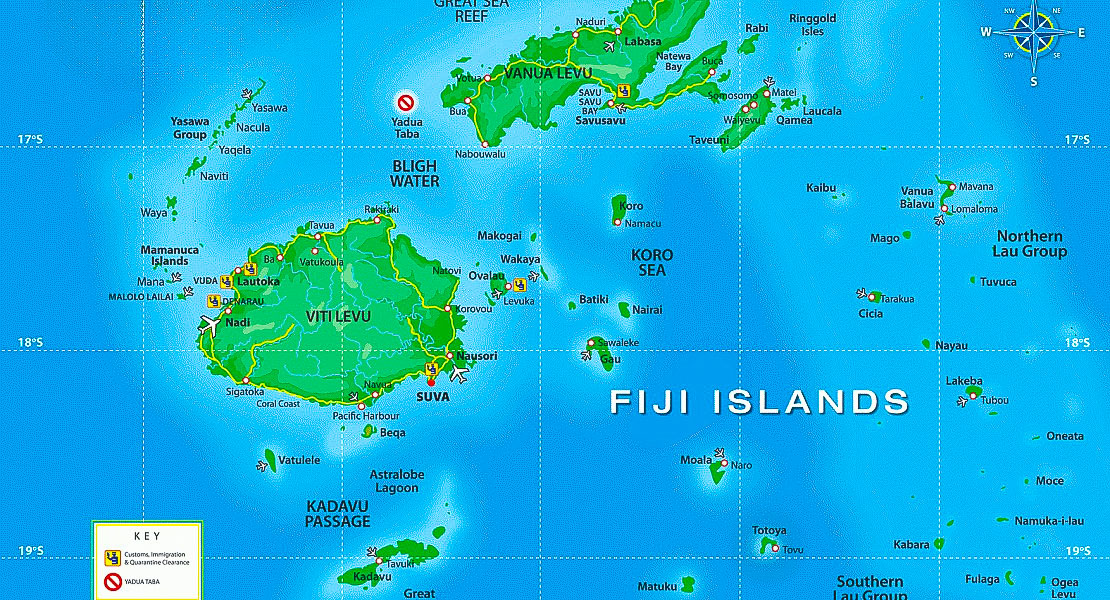
Nadi and Denarau are generally the easiest areas for road-based sightseeing and resort transfers. The Coral Coast and Pacific Harbour offer memorable scenery and cultural experiences, but journey times are longer and road conditions can be less predictable in some areas. For travelers who prefer minimal travel days, choosing a resort near the experiences you want to enjoy can make a meaningful difference.
Choosing an Accessible Place to Stay
Accessible accommodation is more than an entry ramp. Before confirming your room, ask for current, practical details about the full guest journey: parking or drop-off, reception, room entrance, bathroom, restaurant, pool, beach, and transportation pickup point.
An accessible room may be suitable for one traveler and not another. Roll-in showers, grab bars, shower chairs, bed height, door widths, visual alarms, and step-free terrace access all matter differently depending on your needs. Photos are useful, but measurements are better. Request them when a particular feature is essential.
Island resorts deserve extra attention. Some are reached by boat, and the transfer itself may involve a dock, a floating platform, steps, or uneven surfaces. These resorts can still be a great choice for travelers who are comfortable with assisted boarding or who have support traveling with them. They may be less practical for guests who require completely step-free movement at every stage.
It is also worth asking how staff can assist during an emergency, where accessible public restrooms are located, and whether the resort can accommodate dietary needs. Clear information makes it easier for the property to prepare and for you to book with confidence.
Fiji Accessible Travel Guide to Tours and Activities
Fiji is not a one-size-fits-all destination, and neither are its tours. The best experiences are the ones adapted to your comfort level, energy, interests, and preferred pace. A private or small-group tour can be particularly helpful when you need flexible pickup times, more frequent rest breaks, room for equipment, or a guide who can adjust the itinerary on the day.
Cultural village visits can be a rewarding option, especially when the operator can confirm path surfaces, seating availability, restroom access, and the distance from vehicle drop-off to the main activities. Fijian hosts are known for their warmth, and advance communication allows them to offer the right welcome rather than make last-minute assumptions.
Water experiences require the most detailed planning. A sunset cruise, day cruise, or snorkeling trip may involve boarding steps, changing sea conditions, wet decks, and limited accessible restroom facilities. Ask whether there is a gangway, how boarding assistance works, whether crew members are trained to help safely, and if your mobility aid can be secured on board. If entering the water is not practical, a scenic cruise can still offer coral views, island landscapes, and a memorable day on the Pacific.
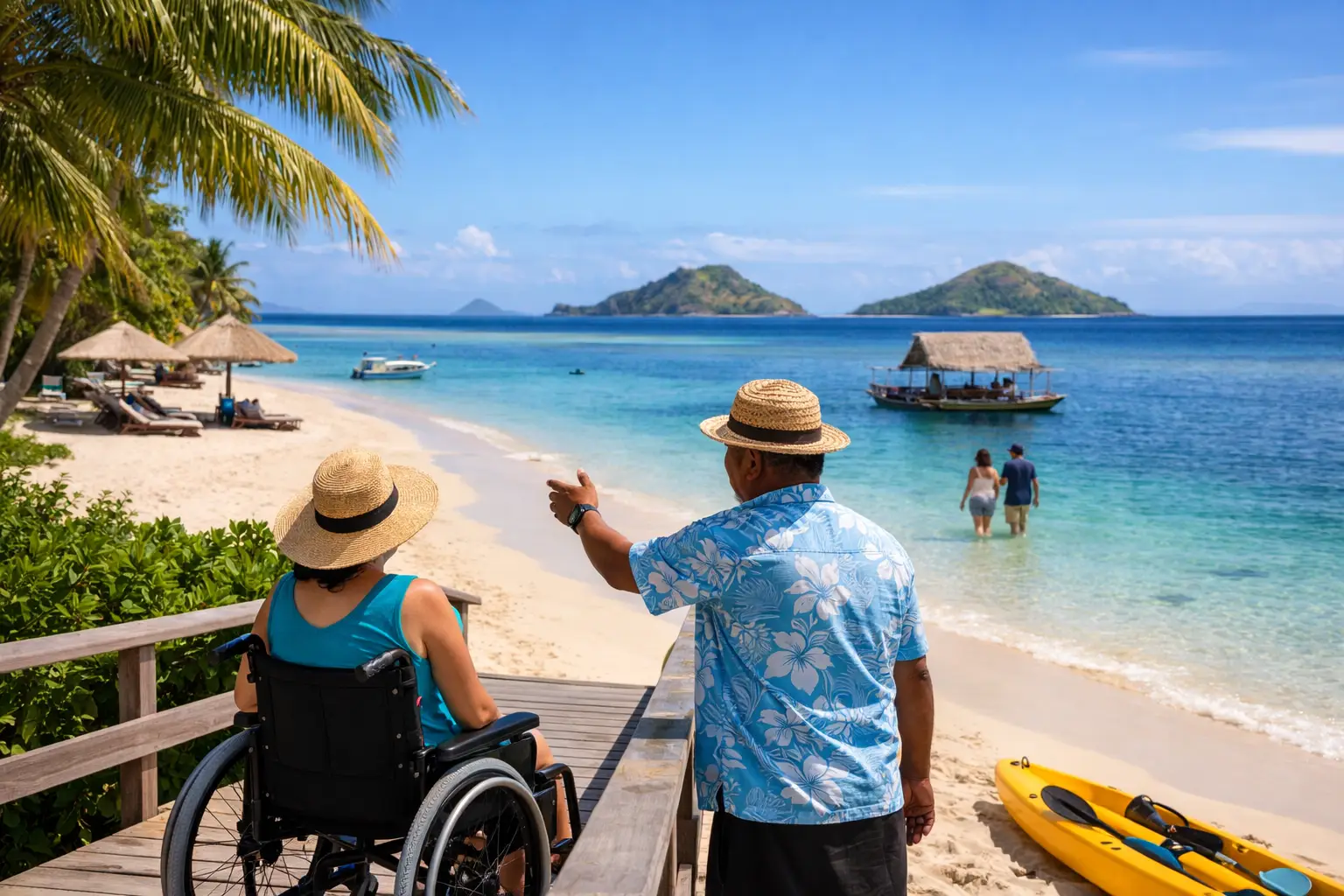
For beach time, ask about the route from the resort to the sand. Many of Fiji’s most beautiful beaches are natural, with soft sand that may be challenging for standard wheelchairs. Some resorts can provide beach wheelchairs or arrange staff assistance, but availability should never be presumed. A pool with step-free access or a lift may be a better fit for some travelers.
Nature tours also vary. Waterfall walks, 4WD safaris, and rainforest experiences can involve uneven terrain, stairs, river crossings, or rough roads. They are ideal for some guests and unsuitable for others. A locally informed booking team can help identify alternatives, such as scenic drives, cultural stops, accessible viewpoints, or a private itinerary with a gentler pace.
What to Tell Your Tour Provider Before You Book
The more specific you are, the more useful the recommendations will be. This is not about limiting your choices. It is about matching you with experiences that work in real conditions.
Share your preferred level of assistance, whether you are traveling independently or with a companion, and the equipment you use. Mention if you need a firm transfer seat, a quiet environment, an interpreter, refrigeration for medication, accessible restrooms, or time to manage fatigue. If standing for a long period is difficult, say so. If steps are manageable with a handrail, that is helpful to know too.
You should also ask about the day itself: pickup timing, driving time, path surfaces, number of steps, seating, shade, meal arrangements, restroom stops, and the operator’s policy if weather changes the plan. Fiji’s tropical weather can affect boating and outdoor terrain, so flexibility is part of practical trip planning.
Packing for Comfort and Independence
Bring essentials in your carry-on, including medication, medical documentation, chargers, backup batteries permitted by your airline, and a basic repair kit for mobility equipment. Fiji’s sun is strong, so pack a wide-brimmed hat, sunscreen, refillable water bottle, and lightweight layers for air-conditioned vehicles or evening breezes.
A compact rain cover can protect a wheelchair or scooter during tropical showers. For sensory comfort, noise-reducing headphones, sunglasses, familiar snacks, or a communication card can make busy travel moments more manageable. If you use specialized equipment, consider carrying a clear instruction sheet so resort and tour staff can support you correctly.
Build in Space for Fiji Time
A packed itinerary can be tiring anywhere, but it is especially easy to underestimate travel time across islands and between resorts in Fiji. Rather than scheduling a major activity every day, choose one or two priority experiences and leave room for a slow breakfast, a pool afternoon, or simply watching the ocean change color from your resort.
For families, this pacing helps everyone. For travelers managing chronic pain, fatigue, or sensory overload, it can be the difference between getting through a trip and truly enjoying it. The right itinerary should feel possible, not like a test of endurance.
Discover Fiji’s Accessible Fiji program is built around the belief that travel should be accessible for everyone. Local knowledge matters because access details are often found in the practical realities that generic descriptions miss: the steep section of a path, the best vehicle for a transfer, the crew that can assist with boarding, or the resort room layout that suits your needs.
Questions Worth Asking Before Departure
Before finalizing your plans, confirm four areas: how you will move from airport to resort and between activities; whether your room and key public spaces meet your access needs; how each tour handles boarding, terrain, and restrooms; and who you can contact if plans change while you are in Fiji.
It is wise to reconfirm essential arrangements a few days before travel, particularly equipment transport, accessible vehicle requests, dietary requirements, and flight arrival details. Keep confirmation information available offline on your phone and in print if that gives you peace of mind.
Fiji rewards travelers who plan with care, then leave space for the unexpected pleasures: a long conversation with a local host, a calm lagoon view, or an unhurried afternoon by the water. Choose experiences that meet your needs, communicate those needs clearly, and let the islands welcome you on your terms.
All Categories
Recent Posts

Fiji Honeymoons: Plan the Right Island Stay

Accessible Fiji: Plan a Holiday That Works