Fiji Resort Transfer Guide for Easy Arrivals
Fiji Resort Transfer Guide for Easy Arrivals
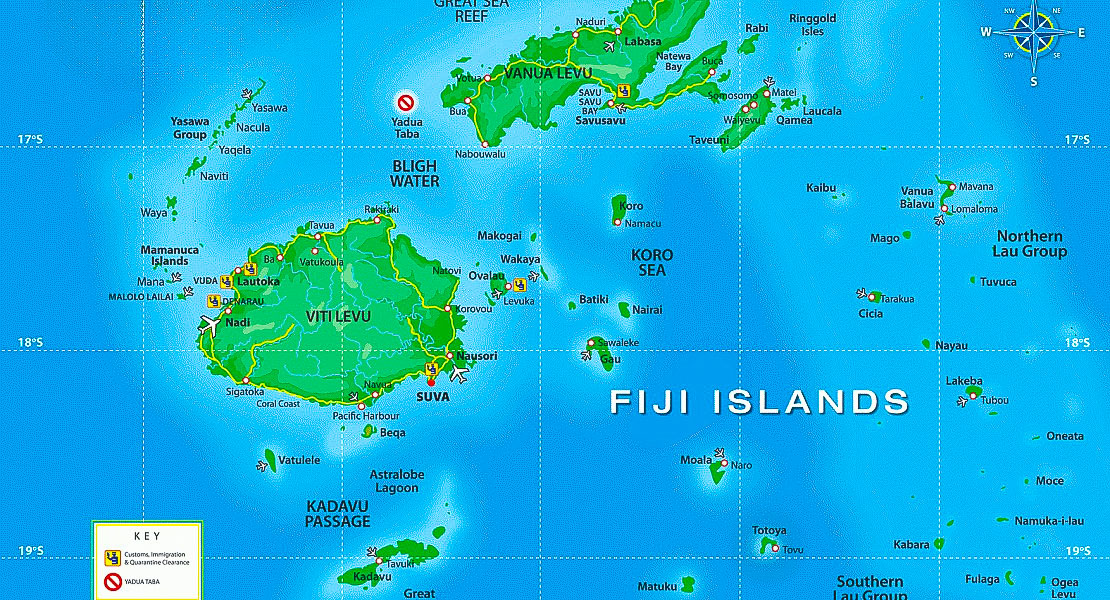
Your Fiji vacation begins long before the first poolside drink. It begins with knowing whether your resort is 20 minutes from Nadi International Airport, a scenic drive down the Coral Coast, or a boat or seaplane ride away from the mainland. This Fiji resort transfer guide helps you choose the right connection, allow enough time, and arrive ready to enjoy the islands rather than sorting out logistics.
Fiji is wonderfully spread out. That is part of its appeal, but it also means that a “resort transfer” can mean anything from a private vehicle to a shared catamaran, a domestic flight, or a small-aircraft transfer over turquoise water. The best option depends on where you are staying, when your international flight arrives, your budget, and how much flexibility your family or travel group needs.
Start with your resort’s location
Most international visitors arrive at Nadi International Airport on Viti Levu, Fiji’s largest island. From there, transfer planning falls into a few clear categories.
Resorts in Nadi, Wailoaloa, Denarau Island, and nearby areas are usually reached by road. Denarau is particularly convenient for travelers joining a day cruise or continuing to the Mamanuca and Yasawa Islands, since its marina is a major departure point for island vessels.
The Coral Coast sits along the southern shoreline of Viti Levu. A road transfer from Nadi can take roughly 1.5 to 2.5 hours depending on the resort, traffic, weather, and stops along the way. The drive is often part of the experience, passing villages, coastline, and sugarcane country, but it is worth considering after a long-haul flight with young children.
Pacific Harbour and the Suva area require a longer drive from Nadi, often around three to four hours. If you are staying near Suva, arriving at Nausori Airport may be more convenient on certain itineraries, although Nadi remains the principal international gateway.
For the Mamanuca and Yasawa Islands, expect a boat, ferry, water taxi, or seaplane connection after arriving in Nadi. Some private-island and outer-island resorts also use domestic flights or boat transfers from smaller airstrips.
Fiji resort transfer guide: choosing road, boat, or air
There is no single best transfer type. Each has a different balance of price, comfort, timing, and holiday atmosphere.
Private road transfers
A private vehicle transfer is a smart choice for families, couples with lots of luggage, travelers arriving late at night, or anyone who wants a direct trip to the resort. Your driver meets you at the airport, helps with bags, and takes you straight to your accommodation without waiting for other guests.
Private transfers generally cost more than shared services, but the difference can make sense for a group. They also offer more control if you need a child seat, have mobility equipment, or want to stop for snacks, cash, or supplies along the way. Confirm these requirements when booking rather than assuming they will be available on the day.
Shared shuttles and coaches
Shared airport shuttles can offer good value for solo travelers and couples staying on the mainland. They may make several resort stops, so the lowest price is usually exchanged for a longer journey. This is rarely a problem for a nearby Nadi hotel, but it can feel tiring if you are headed two hours down the coast after an overnight flight.
Check whether the service operates on a fixed timetable or departs after passengers have assembled. A confirmed booking should state the meeting location, baggage allowance, and whether you will be dropped at your specific resort or a nearby point.
Scheduled boats, ferries, and water taxis
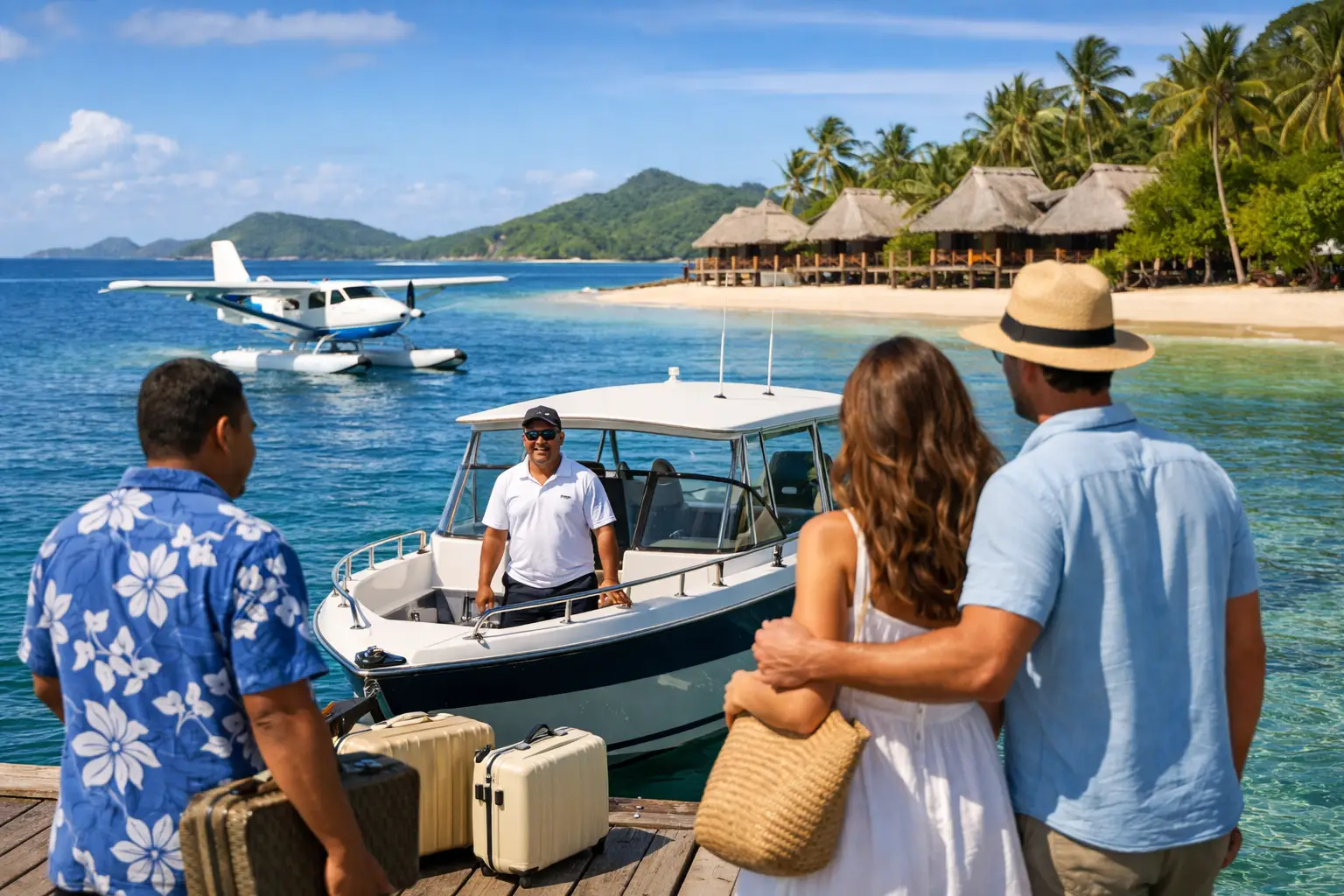
A boat transfer is often the gateway to Fiji’s island resorts. Scheduled vessels are usually the more economical option, especially for popular Mamanuca and Yasawa routes. They are dependable when timed well, but they work to a set schedule. Missing a departure can mean an expensive alternative transfer or an unexpected night on the mainland.
Water taxis and private boats provide greater flexibility and may take you directly to smaller resorts. They are a strong option when flight times do not line up with the regular ferry, though prices can rise quickly for late departures or longer island distances.
Sea conditions matter. Fiji’s waters are often calm and beautiful, but wind and weather can make a crossing bumpy. If anyone in your group is prone to motion sickness, pack appropriate medication in your carry-on and choose a seat with fresh air and a clear horizon where possible.
Seaplanes and small-aircraft transfers
A seaplane or scenic aircraft transfer can turn travel time into one of the highlights of the trip. The aerial views of reefs, sandbars, and island chains are exceptional, and flights can save considerable time on longer routes.
The trade-off is cost, luggage restrictions, and weather sensitivity. Soft bags are often easier to accommodate than large hard-shell suitcases, and excess luggage may travel separately. Small aircraft also operate during daylight, so a late international arrival may require a mainland overnight before an early flight the next morning.
Build enough time into your arrival day
International arrival times, immigration, baggage collection, and customs can vary. After landing, allow time to clear formalities, use the restroom, change money if needed, and find your transfer representative. A connection that looks comfortable on paper can become tight if your flight is delayed or several aircraft arrive together.
For a same-day island boat connection, aim for a generous buffer rather than the shortest possible window. Your transfer provider or resort can advise on the latest practical arrival time, but travelers should not assume a boat will wait for a delayed international flight. Scheduled marine services have other guests and operational timings to consider.
Late-night arrivals are another common planning point. Road transfers to mainland resorts can usually be arranged at most hours, while boats and seaplanes are more limited. Staying near Nadi or Denarau on your first night can be the relaxed choice if your onward transfer leaves the following morning. It also gives you a little recovery time before moving on to an island resort.
What to confirm before you book
A transfer confirmation should answer more than just the price. You need to know where the service starts, when you should be ready, and what happens if plans change. Ask whether the rate is per person, per vehicle, or per booking, and whether taxes, marina fees, or baggage charges are included.
For island transfers, confirm the departure marina, check-in time, voyage duration, and final arrival point. Some resorts are met directly at their jetty, while others may require a short tender boat from a larger vessel. If your resort provides its own compulsory boat transfer, book according to its instructions rather than arranging an outside service that may not match the arrival procedure.
Traveling with a stroller, surfboard, dive gear, golf clubs, or extra luggage? Mention it in advance. Oversized items can affect vehicle choice, boat loading, and aircraft weight limits. The same applies to infant seats and dietary or medical needs during a lengthy journey.
Make transfers easier for families and accessible travelers
For families, the smoothest transfer is often the one with the fewest handoffs. A private car to a mainland resort may be preferable to a cheaper shared coach after a long flight. For island stays, schedule enough time for meals, restrooms, and a change of clothes before boarding the boat. Keep swimwear, medication, sunscreen, chargers, and a spare outfit in a day bag, not in checked luggage.
Travel made accessible for everyone starts with specific information. Travelers with mobility needs should ask about vehicle access, wheelchair storage, marina ramps, boarding assistance, resort jetty conditions, and accessible room transfers before confirming. Conditions differ significantly between properties and vessels, particularly for smaller island resorts. A locally informed booking team can help identify practical options rather than relying on general accessibility descriptions.
Why local coordination makes a difference
A Fiji transfer is not simply transport between two points. It is tied to flight schedules, resort check-in times, vessel operations, weather, and the geography of the islands. Booking through experienced local specialists helps reduce the gaps between those moving pieces, particularly when you are combining an airport arrival, a mainland stay, and an island cruise or excursion.
Discover Fiji works with locally vetted operators and can help travelers plan transfers alongside day tours and activities, with support before, during, and after the trip. That local knowledge is especially valuable when plans need to change or when a connection involves more than one mode of travel.
Keep your arrival day lightly scheduled, confirm transfer details a few days before departure, and save the operator’s contact information where you can access it offline. Once you step onto the right boat, road, or aircraft, the journey to your resort becomes part of the Fiji experience you came for.