Fiji Transport Options for an Easy Island Stay
Fiji Transport Options for an Easy Island Stay
Fiji transport is part of the holiday experience, not just the gap between your flight and the beach. A speedboat ride across a turquoise lagoon, a small-plane window seat over coral reefs, or a scenic drive through sugarcane country can become a highlight in its own right. The key is choosing transport that matches your island, your arrival time, and the pace you want for your trip.
Fiji is made up of more than 300 islands, so there is no single best way to get around. Most international visitors arrive at Nadi International Airport on Viti Levu, while many popular resorts are reached by road, boat, or domestic flight from there. With a little advance planning, the logistics can feel wonderfully easy.
How Fiji Transport Works Between Islands
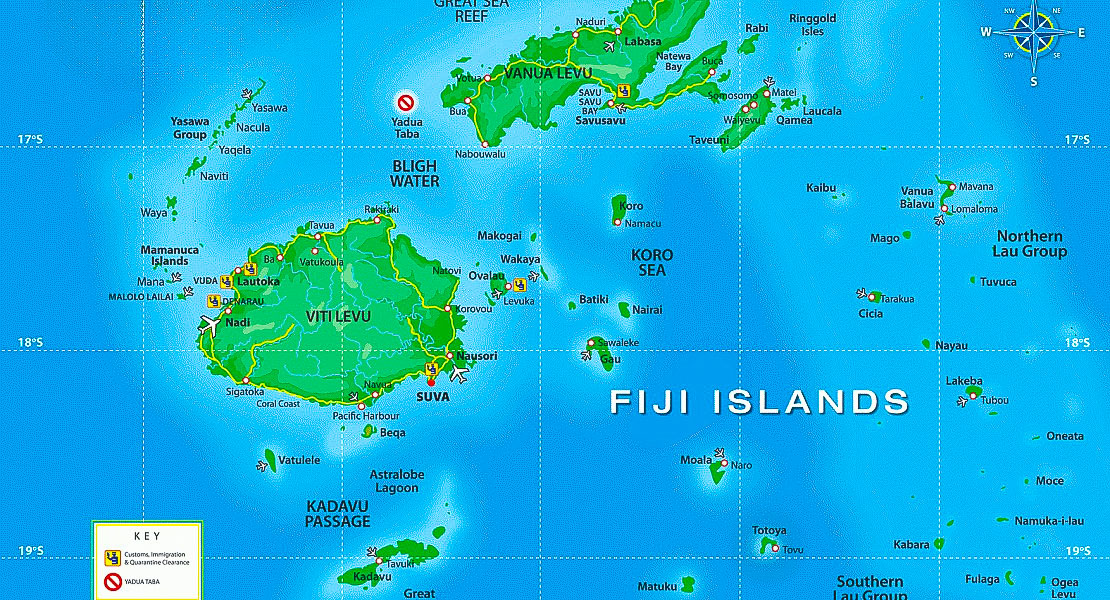
Start by thinking of Fiji in three travel zones. Viti Levu is the largest island and home to Nadi, Denarau, the Coral Coast, Pacific Harbour, and Suva. Vanua Levu, where Savusavu and Labasa are located, is generally reached by domestic air or ferry. The Mamanuca and Yasawa Islands are usually reached by scheduled catamaran, private launch, seaplane, or helicopter.
Your resort location matters more than the name of the nearest major town. A property on the Coral Coast may be an easy road transfer from Nadi, while an island resort that looks close on a map could require a specific boat departure from Denarau Marina. Before booking flights or activities, confirm the resort’s transfer point, departure schedule, luggage allowance, and final check-in time.
This is especially important for late international arrivals. Some island boat services do not operate after dark, and a same-day connection may not be practical if your flight is delayed. In those cases, an overnight stay near Nadi or Denarau can make the first day of your vacation far more relaxed.
Airport Transfers From Nadi and Suva
For most visitors, pre-arranged airport transfers are the simplest start to a Fiji vacation. A driver meets you after arrival and takes you directly to your hotel, resort, marina, or domestic terminal. It removes the need to negotiate fares after a long flight and gives families a much easier path through luggage, car seats, and unfamiliar surroundings.
Private transfers are a strong choice for couples, families, groups, and travelers arriving outside standard shuttle times. They are direct and flexible, and they can be worthwhile when the cost is shared. Shared shuttles can offer good value for solo travelers or couples, though they may involve additional resort stops.
Nadi Airport is the main gateway for Denarau, the Coral Coast, Lautoka, and many island connections. Suva’s Nausori Airport is useful if you are staying in or around Fiji’s capital, but it is not the usual arrival point for first-time resort visitors. If your itinerary includes both sides of Viti Levu, it may make sense to arrive in Nadi and depart from Suva, depending on available international flights.
When booking a transfer, provide your flight number and accommodation details. A trusted local provider can track common arrival patterns, advise on realistic travel times, and help coordinate changes if plans shift. Discover Fiji works with locally vetted operators, so travelers can book with confidence before they land.
Boats, Ferries, and Flights to Island Resorts
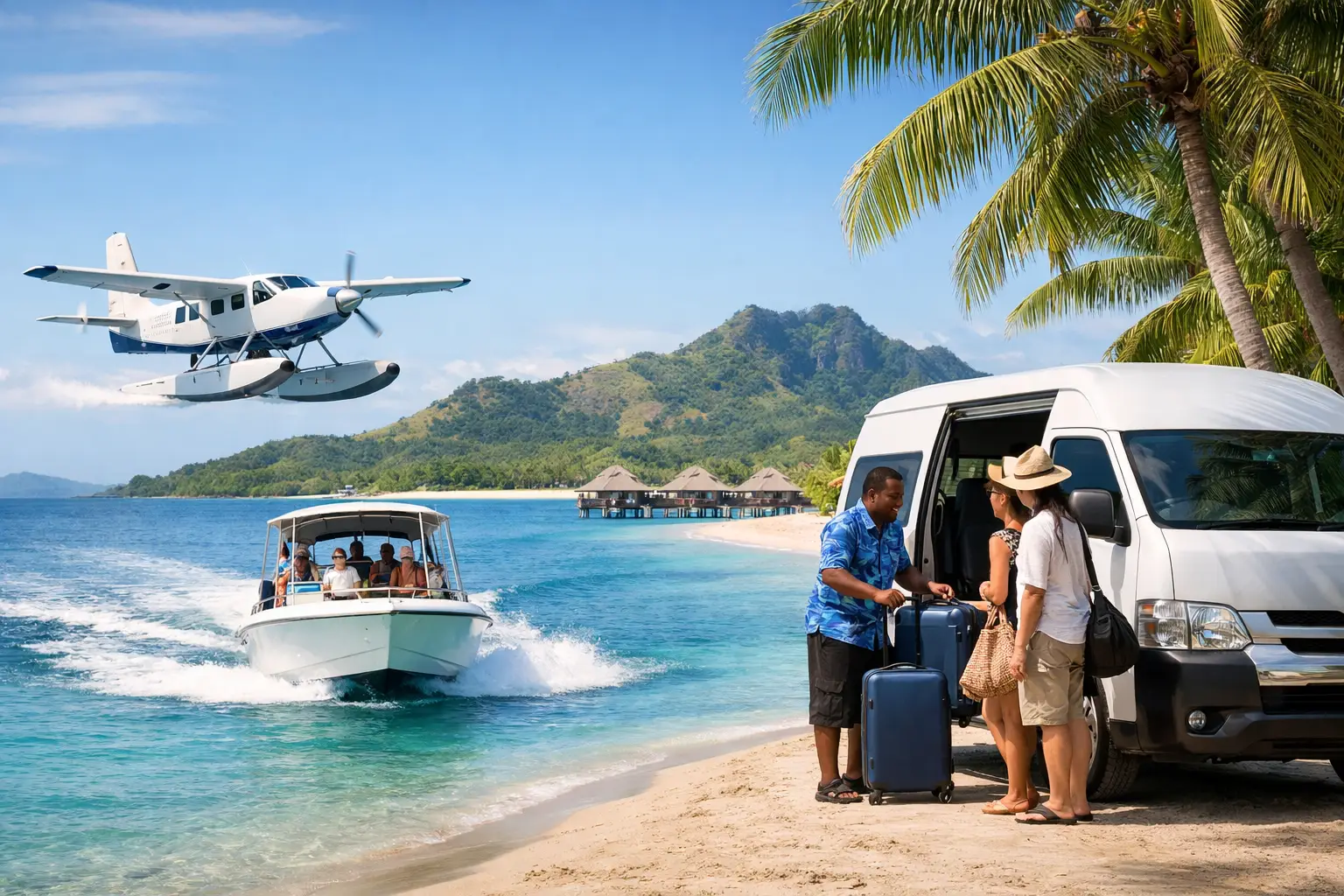
For the Mamanuca and Yasawa Islands, boat travel is often the classic choice. Scheduled catamarans depart from Denarau Marina and serve many resorts along the route. They are dependable, scenic, and generally more affordable than air transfers. The trade-off is time: the farther north you travel into the Yasawas, the longer the journey can be.
Private launches are faster and more personal, particularly for a family, honeymoon, or group traveling on a specific timetable. They also make sense when your resort has a direct transfer service. Conditions can be choppy at times, so travelers prone to motion sickness may prefer a flight where it is available.
Seaplanes and helicopters offer the fastest route to many island resorts and deliver unforgettable views of reefs, sandbars, and deep-blue channels. They are ideal when vacation time is limited or when the journey itself is high on your wish list. Keep in mind that weight limits apply, soft luggage may be preferred, and weather can affect operations.
Domestic flights connect Nadi and Suva with destinations including Savusavu, Labasa, Taveuni, Kadavu, and parts of the outer islands. These services are usually the most efficient option for travelers heading to Vanua Levu or more remote diving and nature destinations. Small aircraft schedules can be less frequent than major international routes, so leave room between connections rather than planning every transfer down to the minute.
Ferries are another option for selected inter-island routes, particularly between Viti Levu and Vanua Levu. They can be a practical choice for travelers with more time, larger luggage loads, or rental vehicle plans. However, schedules may be less convenient than flying, and travel times are considerably longer. For a short stay, the time saved by a domestic flight is often worth the additional cost.
Getting Around Viti Levu
On the main island, visitors can choose from private drivers, taxis, hotel shuttles, public buses, and rental cars. The right option depends on whether your goal is a resort-based escape or a flexible road-trip itinerary.
A private driver or guided day tour is excellent for visiting waterfalls, villages, markets, the Garden of the Sleeping Giant, or the Coral Coast without worrying about directions. It is also a comfortable option for guests who would rather enjoy the scenery than navigate unfamiliar roads. For full-day excursions, ask whether entrance fees, meals, and pickup from your resort are included.
Taxis are widely available in larger towns and tourist areas. Metered taxis are common around Nadi and Suva, while longer trips are often agreed at a fixed price. Confirm the fare before departure if a meter is not being used, and carry some Fiji dollars for smaller journeys.
Public buses are inexpensive and offer a genuine local perspective, but they are not designed around resort schedules. They can be enjoyable for short, low-pressure trips, especially along busier routes, yet they are less suitable when you need to catch a boat or arrive for a timed activity.
Rental cars give you the most independence on Viti Levu. Fiji drives on the left, roads range from well-paved highways to narrower rural stretches, and driving after dark is best avoided outside major areas. A rental car is a particularly good fit for travelers staying several nights on the Coral Coast or combining Nadi, the highlands, and Pacific Harbour. It is less useful if you will spend most of your trip on a small island resort.
Build Transfer Time Into Your Vacation
The best Fiji itineraries do not treat transfer time as an inconvenience to be squeezed out. They allow for a calm arrival, a realistic connection, and a little flexibility for weather or airline changes. If you land in Nadi in the afternoon, a nearby resort or Denarau overnight can be the smarter choice before an early island boat departure.
For an island-hopping itinerary, book the transport first and then fit tours around it. A sunset cruise, scuba trip, or village visit may have fixed pickup times that do not align with ferry arrivals. Keeping your first and last day at each resort relatively open gives you more breathing room.
Travelers with mobility needs should also confirm transport details early. Access can vary between vehicles, marinas, boats, aircraft, and resort jetties. Ask about step-free vehicle access, storage for mobility equipment, boarding assistance, accessible restrooms, and the terrain at your accommodation. Travel made accessible for everyone begins with clear information, not assumptions.
A well-planned transfer lets you arrive ready to enjoy Fiji rather than recover from the journey. Choose the route that suits your budget, comfort level, and available time, then leave enough room for the islands to set their own gentle rhythm.