How to Visit Fiji Villages Respectfully
How to Visit Fiji Villages Respectfully
A Fijian village visit can be one of the most memorable parts of your holiday, but it is not an attraction you simply walk into between beach stops. Villages are living communities with their own customs, church schedules, family life, and leaders. Knowing how to visit Fiji villages respectfully helps turn a cultural tour into a genuine exchange – and ensures your presence is welcomed.
The simplest rule is this: go with a reputable local guide or organized cultural tour. They will arrange permission, transportation, timing, and the traditional welcome protocol before you arrive. That removes the uncertainty for you and helps the host village maintain control over how visitors are received.
Book a village visit through a local operator
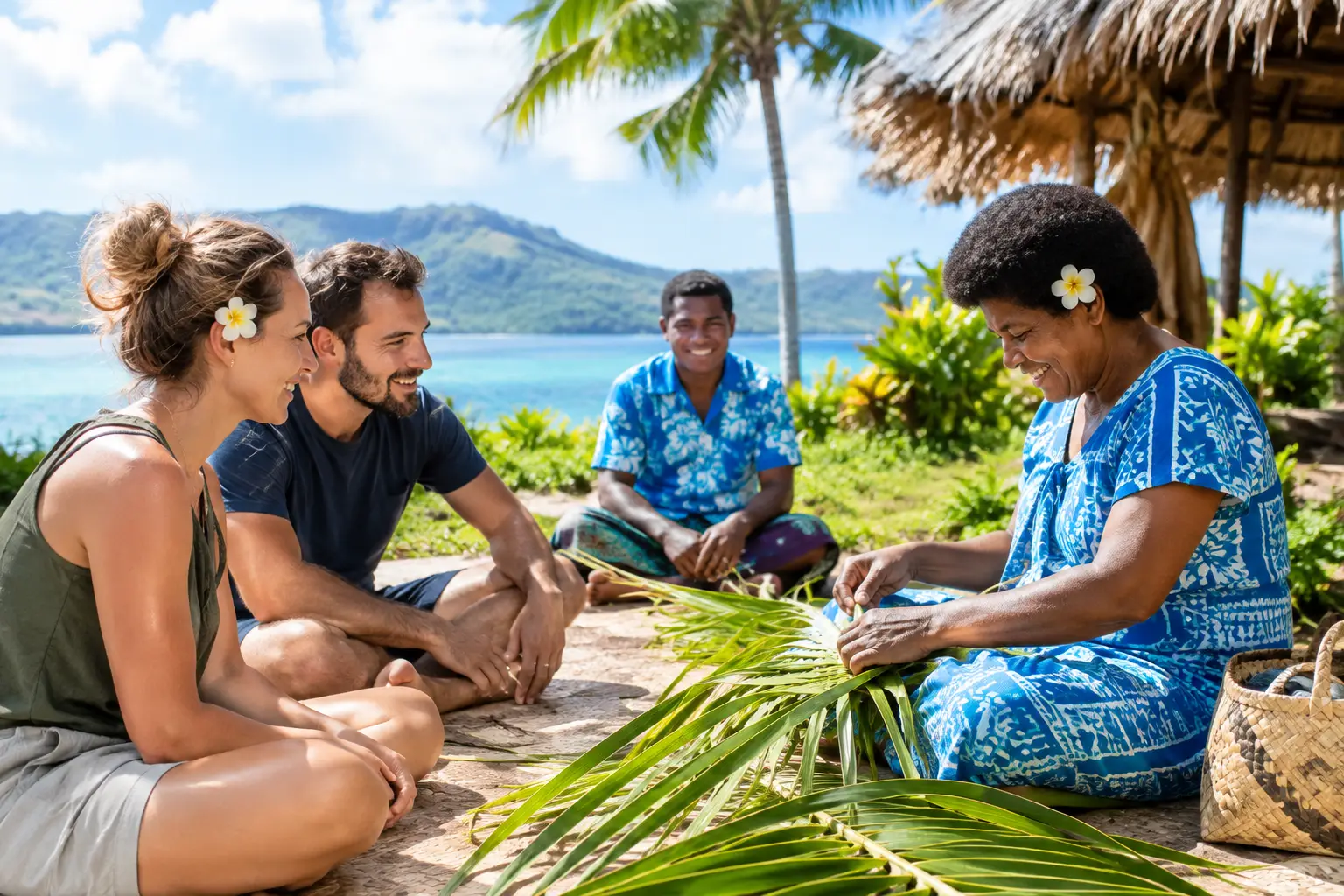
Many Fijian villages welcome visitors through established tourism programs, often as part of a cultural day tour, 4WD safari, river excursion, or highlands experience. These visits are planned with the community and may include a welcome ceremony, meke performance, handicraft demonstration, shared meal, or time to meet local residents.
Avoid arriving unannounced at a village, even if it is close to your resort or along a scenic road. A village is private community space, not an open-access site. Permission is typically sought through the village chief or designated representative, and a guide understands who to contact and how to make the introduction properly.
A pre-arranged experience also makes the day easier logistically. Your operator can confirm whether transfers are included, whether the route suits young children, and whether there are uneven paths, stairs, or other considerations for travelers with mobility needs. If accessibility is a priority, ask these questions before booking so the experience can be matched to your requirements.
Understand the sevusevu welcome
On many village visits, guests take part in sevusevu, a traditional presentation of yaqona root. Yaqona, also known as kava, is prepared as a ceremonial drink and is an important gesture of respect when entering a village.
Usually, your guide supplies the yaqona and presents it on behalf of the group. There is no need to buy a gift yourself unless your tour operator specifically recommends it. Bringing something without guidance can create more awkwardness than goodwill, particularly when the village has an established visitor process.
If you are invited to drink yaqona, your guide will explain what to do. In many settings, you clap once before receiving the cup, drink it in one go, then clap three times afterward. It has an earthy taste and can make your lips feel slightly tingly or numb for a short time. If you do not drink alcohol, yaqona is generally non-alcoholic, but you can still tell your guide privately if you have dietary, health, pregnancy, or personal concerns. Hosts and guides can advise on the most respectful approach.
Protocols differ from village to village. Follow your guide rather than trying to memorize every gesture. A calm, attentive attitude matters far more than perfect ceremony.
Dress modestly for the village
Beachwear belongs at the beach. For a village visit, choose clothing that covers your shoulders and knees. A loose shirt or T-shirt with longer shorts, pants, or a skirt is a practical choice for all travelers. Many visitors bring a sulu, the versatile Fijian wrap worn around the waist, which is useful for adding coverage before entering the village.
Comfortable shoes are helpful, especially for rural roads and walking paths, but you may be asked to remove them before entering a home, hall, or church. Slip-on sandals can be convenient, though closed shoes may suit a highlands or waterfall tour better.
Hats and sunglasses should normally come off when you are greeting elders or taking part in a formal welcome. Your guide will let you know if a particular location has additional expectations. Dressing appropriately is not about looking formal. It signals that you recognize you are entering someone else’s home community.
Follow your guide’s lead once you arrive
Fijian hospitality is warm, generous, and often full of laughter. A respectful visit does not require you to be stiff or nervous. It does mean paying attention to the people welcoming you.
Listen when your guide introduces the village, its chief, or its community representatives. Wait to be invited into communal spaces and sit where you are directed during a ceremony. Keep voices low during formal moments, and let your guide set the pace if the group is moving through homes, a church, or the village green.
A few words go a long way. “Bula” is the familiar Fijian greeting, while “vinaka” means thank you. Say them naturally, smile, and be present. You do not need a long speech to show appreciation.
Travelers sometimes worry about making a small mistake. Most hosts understand that visitors are learning. The better approach is to ask your guide quietly when you are unsure, rather than assuming that the same custom applies everywhere in Fiji.
Ask before taking photos or videos
A village visit may be colorful and photogenic, but people are not scenery. Always ask before photographing individuals, especially children, elders, religious spaces, homes, or ceremonial activities. Your guide can request permission from the right person and let you know where photography is not appropriate.
This is particularly relevant during sevusevu and church visits. Some communities welcome photos after the formal part of a ceremony, while others prefer no recording at all. Put your phone away when requested and avoid flying a drone unless there is explicit advance permission. Drones can feel intrusive in a close-knit community and may be restricted near homes or gathering spaces.
If you are sharing photos later, choose images that reflect the visit with dignity. A warm group photo taken with consent is very different from a close-up captured without asking.
Be thoughtful about children, gifts, and shopping
Children may greet visitors with curiosity and enthusiasm. Be friendly, but avoid handing out candy, money, or school supplies directly to children. Unplanned gifts can create pressure, disrupt routines, and unintentionally encourage children to approach tourists for items.
If you would like to contribute, ask your guide whether the community has a preferred way to receive donations. On many tours, buying locally made crafts or food is a direct, welcome way to support families. Pay the stated price fairly and remember that handmade items take time and skill.
You may be offered a meal, fruit, or a drink as part of the visit. Accepting graciously is a lovely way to participate, though food allergies and dietary needs should be shared with your operator ahead of time. This gives hosts time to plan rather than putting them on the spot.
Choose timing that respects village life
Village visits are often available year-round, but weather, road conditions, community events, and religious observances can affect the schedule. Sundays are particularly significant in Fiji, with many communities focused on church, family, and rest. Some tours operate on Sundays with a different format, while others do not enter villages at all.
For the most comfortable experience, confirm the departure time, transfer length, and what is included before booking. A visit in the highlands can involve a longer drive but offers dramatic scenery and a different perspective on Fiji beyond the coast. A village experience closer to Nadi, Coral Coast, or Suva may be easier for families or travelers with limited time. Neither is automatically better – the right choice depends on your itinerary and how much travel time you want in your day.
Why a guided visit makes the difference
The best cultural experiences are built on relationships, not quick photo stops. Local operators who work regularly with host communities can coordinate the details respectfully while giving you meaningful context along the way. You will understand what you are seeing, know what is expected, and have support if plans change due to weather or local events.
Discover Fiji curates village and cultural experiences with Fiji-based knowledge, so travelers can book with confidence and focus on the welcome ahead. Choose a visit that allows enough time to listen, participate, and meet the people hosting you. Come dressed with care, follow local guidance, and leave room in the day for genuine conversation – that is where the lasting memories tend to happen.
Recent Posts